

Accurate information is the foundation of a functioning democracy
A worldwide network of scientists sorting fact from fiction.
Our goal is to empower readers to discern trustworthy news.
Insights
-
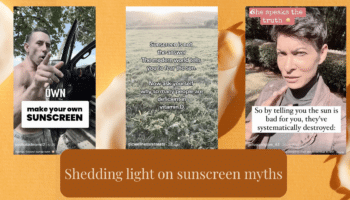
Shedding light on sunscreen myths
Sunscreen protects us from the Sun’s harmful UV radiation. But it’s often vilified on social media through false claims that it’s unnecessary or harmful to humans. We debunk some of the most prevalent misinformation narratives in this Insight article.
-
2026’s El Niño may bring storms, heatwaves – and misinformation
El Niño doesn’t cause climate change, so why do people claim it does?
-
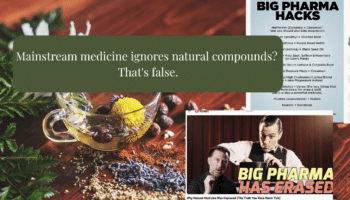
Wellness influencers claim mainstream medicine ignores natural remedies. They’re wrong
Social media posts promoting natural health products propagate the narrative that mainstream medicine disregards natural cures for the sake of profit. But this narrative is flawed and can lead to an incorrect assessment of the risks and benefits of natural health products. We explain in this Insight article.
Newsletter subscription
Get scientists’ reviews and articles delivered directly to your inbox
Recent Reviews
-
 Inaccurate
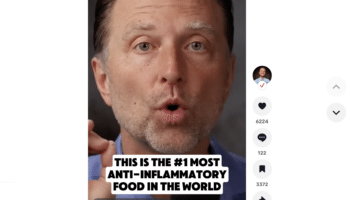
Vitamin K shot doesn’t stop stem cells from circulating or change blood thickness
Claim:
Vitamin K injection given at birth thickens the blood, prevents stem cells from circulating
Source: TikTok, X/Twitter, Valerie Anne Smith, Social media users, Daniel Pompa, 2026-05-05 -
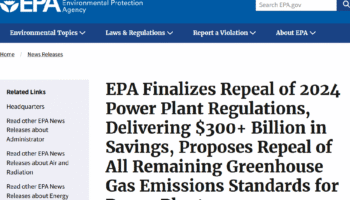 Misleading
Evaluating the EPA’s claim on U.S. power plant emissions
Claim:
Models continue to show that GHG emissions from power plants have no material impact on global climate change.
Source: Environmental Protection Agency, 2026-09-14 -
 Unsupported
 -
 Unsupported
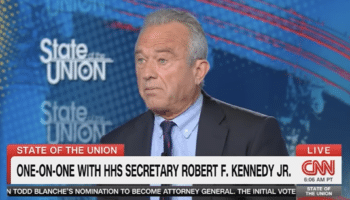
RFK Jr. spreads unfounded conspiracy theory that Lyme and RSV were engineered
Claim:
Lyme disease and RSV were engineered in gain-of-function experiments
Source: Fox News, Robert F. Kennedy Jr., 2026-08-02 -
 Unsupported
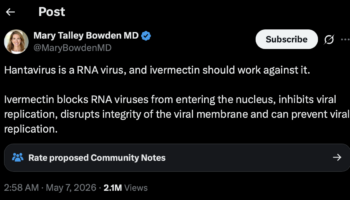
Doctor misleads with post claiming ivermectin works against hantavirus
Claim:
Ivermectin “should work” against hantavirus because it blocks “RNA viruses from entering the nucleus [and] inhibits viral replication”
Source: X/Twitter, Mary Talley Bowden, 2026-05-07 -
 Inaccurate
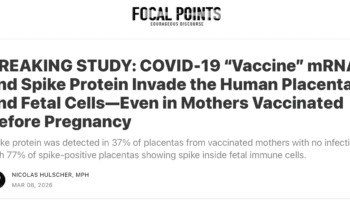
German placenta study didn’t show COVID-19 mRNA vaccines are harmful
Claim:
Vaccine-derived spike protein is harmful, its presence in placenta linked to rise in infant mortality
Source: X/Twitter, The Focal Points, Nicolas Hulscher, 2026-03-08
Analyses & Investigations
-
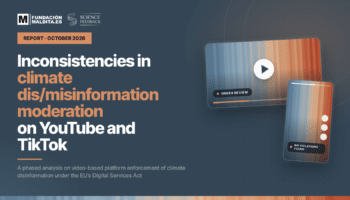
YouTube and TikTok rarely act on climate misinformation, even when it breaks their own rules
A joint investigation by Science Feedback and Fundación Maldita.es reported more than 300 climate misinformation videos in French and Spanish. YouTube never answered, and TikTok restricted only a small minority of them and overturned none of its decisions on appeal.
-
What our second measurement says about misinformation on major platforms in Europe
TikTok continues to show the highest prevalence of mis/disinformation (~25% of exposure-weighted posts), up from ~20% in the first measurement.
The interaction advantage of low-credibility accounts over high-credibility ones persisted or worsened on most platforms. -

2025 review of climate misinformation and environmental coverage in the French media
For the first time, climate misinformation broadcast on television and radio has been quantified and qualified over an entire year.
Over the course of 2025, we detected a total of 665 cases, an average of 13 cases per week.
News & events
-
Science Feedback at the ‘Assises du journalisme de Tours’: Tackling Health, Climate, and Science Disinformation
-
EU Disinfo Lab webinar: Are platforms curbing disinformation? Scientific, cross-platform evidence from Six VLOPs
-
Tech.Rocks Summit 2025: Using AI to detect climate disinformation in audiovisual media
press
-
 France Culture
Series: Rumors That Changed the World (Episode 4/10): “Climate Change Is Natural”
(Translated from French) Emmanuel Vincent points out that, as early as the 1970s and 1980s, the oil industry knew that burning fossil fuels was causing global warming but chose to wage campaigns to “sow doubt in order to protect their profits.”
-
 RFI
RFI
TikTok and META top the list of online disinformation in Europe
(Translated from French) Measuring – scientifically – this amplification of dubious publications remains a challenge, given the opaque workings of digital services. A group of civil society organizations is attempting to meet this challenge through the SIMODS research project…
-
 Euractiv
TikTok carries more disinformation than major social rivals, study finds
Emmanuel Vincent, lead author and founder of Science Feedback, hit out at the platforms for failing to label AI-generated content while monetising accounts that spread it.
-
 TV5 Monde
Climate: How to combat disinformation? (64′ Debate)
(translated from French) Beyond the denial of climate science itself, an increasing amount of misinformation targets solutions to curb climate change, such as renewable energies, electric vehicles, and policies to reduce greenhouse gas emissions.