• Climate

The Telegraph issues a public correction after scientists point to inaccuracies

Posted on: 

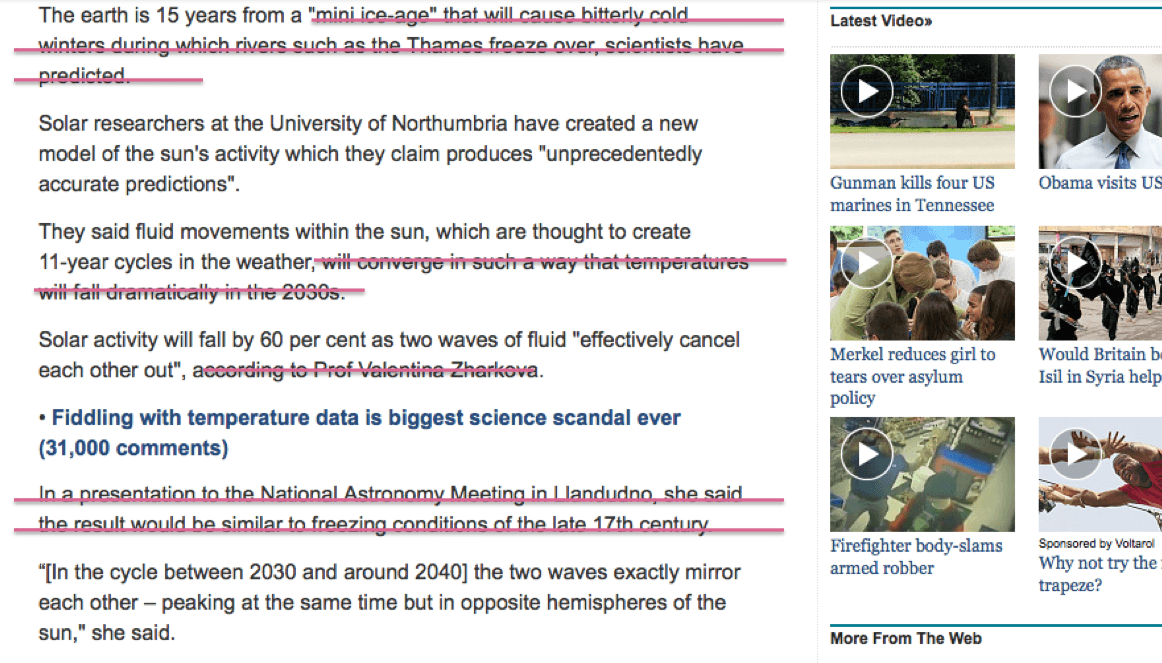
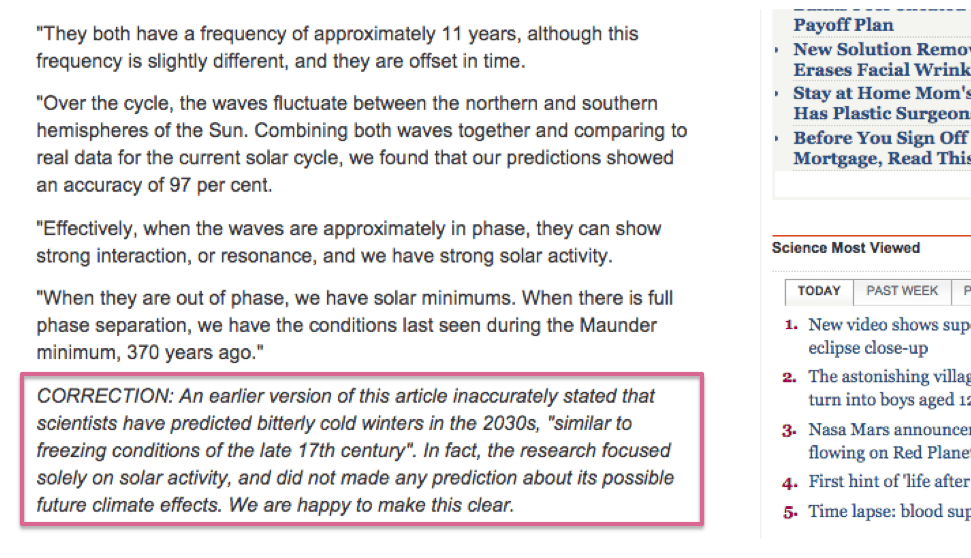
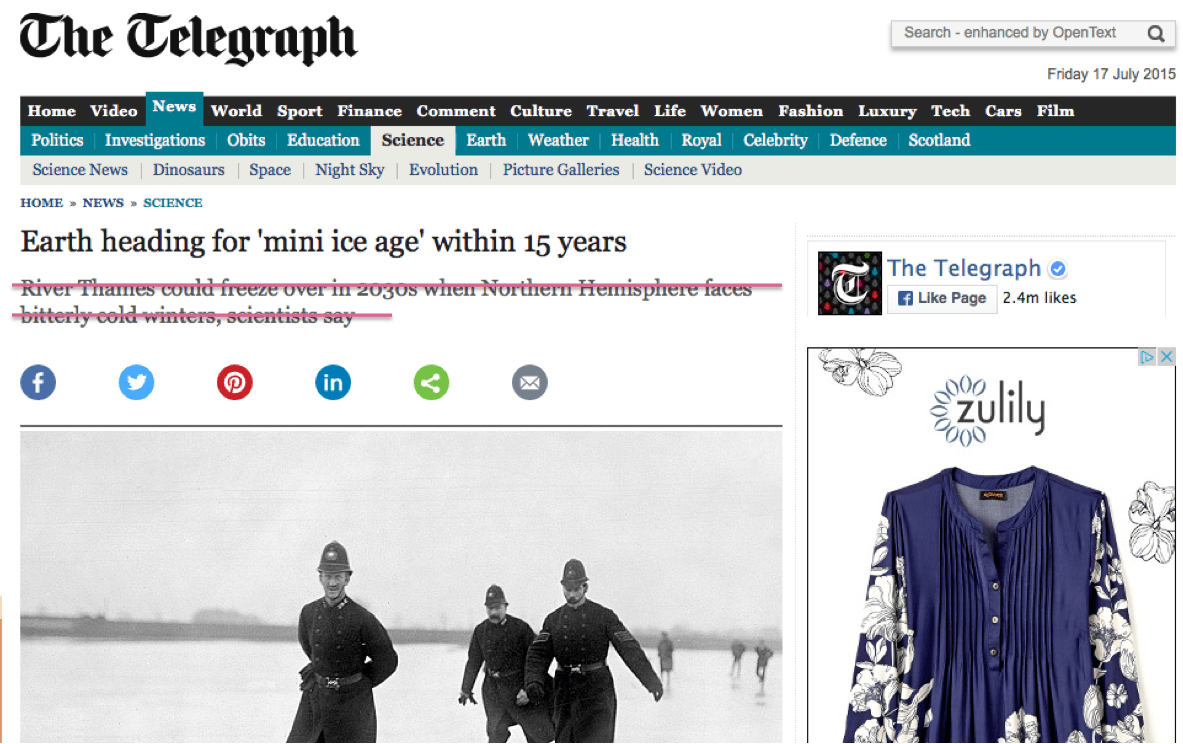
A few days after Climate Feedback published an analysis of Dan Hyde’s article “Earth heading for ‘mini ice age’ within 15 years”, the Telegraph made major modifications to the original article and issued a correction. The author withdrew 5 sentences including the subtitle “River Thames could freeze over in 2030s when Northern Hemisphere faces bitterly cold winters, scientists say”. The article has been modified in such a way that there are no longer any statements to support the idea of an imminent ice age.


Sentences that have been modified or removed from the original article are highlighted in red:
Screen Shot 2015-10-01 at 15.59.48
Screen Shot 2015-10-01 at 16.00.01
Screen Shot 2015-10-01 at 15.59.37

Science Feedback is a non-partisan, non-profit organization dedicated to science education. Our reviews are crowdsourced directly from a community of scientists with relevant expertise. We strive to explain whether and why information is or is not consistent with the science and to help readers know which news to trust.
Please get in touch if you have any comment or think there is an important claim or article that would need to be reviewed.

Tags:

Published on:

Related Articles

  • omega-3 supplements depression

    Omega-3 supplements: not a silver bullet for depression

    Health influencers suggest omega-3 supplementation can treat depression or even replace antidepressant medication. But such claims put vulnerable people at risk. In truth, the scientific evidence behind the effectiveness of omega-3 supplementation for depression is more uncertain than these social media posts let on. We explain in this Insight article.

  • Examples of social media posts containing nutrition misinformation.

    You are what you eat: how dietary misinfo appeals to our emotions

    Harmful nutrition misinformation circulates widely online. From the raw food movement to the carnivore diet, we look at how these trends exploit various psychological levers to gain popularity in spite of the lack of scientific evidence to support them.