Caleb Rossiter falsely claims that climate models are "running very hot"
Claim:
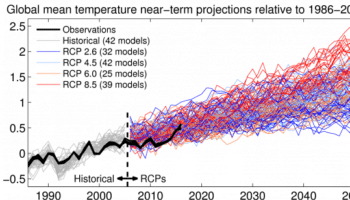
The models predicted about three times the amount of warming in the world we’ve seen since [1988].
Latest in
Claim:
The models predicted about three times the amount of warming in the world we’ve seen since [1988].
Claim:
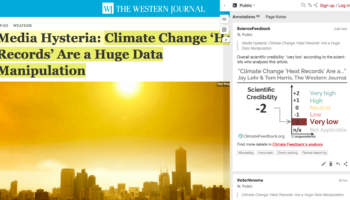
The science is clear, climate change is making extreme weather events, including tornadoes, worse.
“What would make their case stronger would be if they actually analysed all the data, engaged with the existing scientific literature and made their own contribution to our scientific understanding by publishing a scientific paper. The cherry picking exercise in this Western Journal article does not contribute to our scientific understanding of the world.”
Claim:
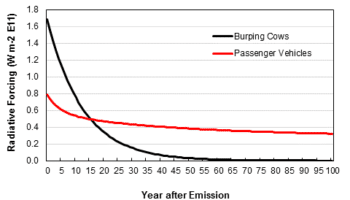
Burping cows are more damaging to the climate than all the cars on this planet.
Over the past decade, a growing body of research has proposed ways in which rapid Arctic warming can lead to harsh winters, summer heatwaves and even floods and droughts across the mid-latitudes. Some scientists say that climate change and Arctic sea ice loss are the root cause of these events, but others are more circumspect. In this detailed Q&A, scientists discuss the potential connections between Arctic warming and extreme weather across the mid-latitudes, what those theories look like, and how the evidence measures up.
Compared to last year’s top 10, there is a notable lack of low credibility stories. Two stories garnered mixed reviews from scientists. In one case, this was an article detailing false claims about sea level rise made by politicians, in which some reviewers felt the article simply wasn’t clear enough in its corrections. But there were no articles from partisan outlets presenting inaccurate rejections of climate system at the top in 2018. Instead, the list was dominated by major news outlets—with the exception of the top story, which was published by the local FOX station in St. Louis.
This story in The New York Times covered the October release of the IPCC’s “Global Warming of 1.5 °C” report. Scientists who reviewed the story found that it provided an accurate and detailed summary of the report, though some statements about warming being “worse than previously thought” could have used some clarifying context.
“The word “Avoiding” in title and text is overly strong and should have been “Reducing”. Adopting a vegan diet is not necessary, but a reduction to having meat 1-2 times a week and dairy 3-4 times a week would suffice. In fact, flexitarian diets utilize natural resources much more efficiently than vegan diets[1]. In the article, Peter Alexander is quoted saying something to the same effect.”
“The comments from the members of the Committee suffer from severe inaccuracies and misconceptions, and citations of the invited climate scientist mostly address those issues.
In general, the views that go against our understanding of the climate change process are underlined and presented as such by the author, but rarely supported by statements or explanations that go beyond the immediate replies from the invited climate scientist. Some of the inaccurate statements quoted in the text are thus left with an incomplete challenge.”
“Scientifically, the article is overall correct, but it is in cases inaccurate in its description of certain aspects of the IPCC. For example, the IPCC does not conduct research, but assesses the available scientific evidence. The article also provides statements without context, despite this being essential for their interpretation.”