- Health
Can HPV infection be treated? Here are the facts

Introduction
For many women, getting a positive human papillomavirus (HPV) test is an unsettling experience. On top of that, the stigma associated with HPV infection can make discussing the issue with those around them feel awkward or embarrassing. Small wonder then that many women turn to online spaces to seek help. One example is r/HPV, a HPV-centric forum on the platform Reddit which receives about 42,000 weekly visitors. Similarly, there are more than 229,000 videos on TikTok tagged with the hashtag #hpv.
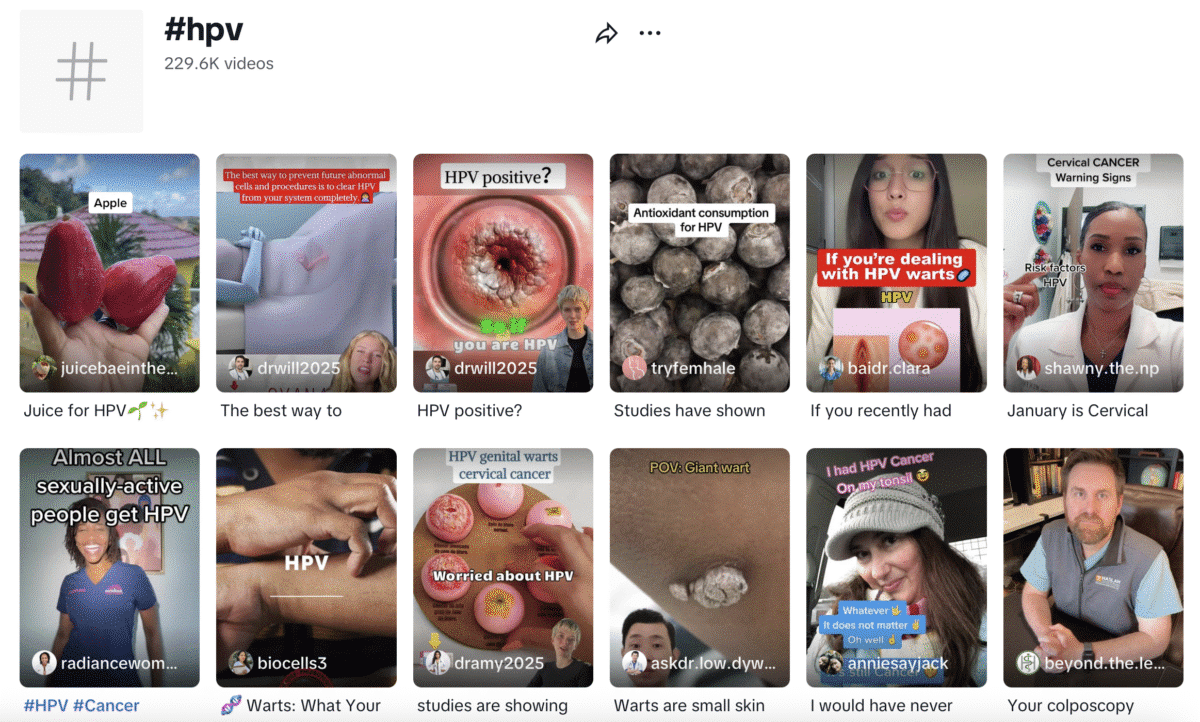
Many posts contain discussions of women’s experiences coping with HPV infection. But more concerning are the numerous posts promoting ways to treat HPV infection with dietary supplements, herbs, and topical gels. The goal of using such treatments, one user asserted, is to “support [the] immune system” and “clear HPV naturally”. Some of these posts have received hundreds of thousands of views on TikTok.
But how much scientific evidence is there to support these claims, and are these treatments harmless?
In this Insight article, we examine the scientific credibility of some of these claims with two experts: Linda Eckert, a professor of obstetrics and gynecology at University of Washington and author of the book “Enough: Because We Can Stop Cervical Cancer”, which documents women’s experiences with cervical cancer and outlines evidence-based changes to combat the toll of cervical cancer, and Kevin Ault, a professor at Western Michigan University and a Fellow of the American College of Obstetricians and Gynecologists.
HPV infection is common, most don’t lead to lasting problems
Although the term “human papillomavirus” is used in the singular, it actually refers to a group of about 200 known viruses. Nearly everyone who is sexually active will be infected with HPV at some point in time. Most who are infected don’t show any symptoms, which makes the infection difficult to detect. A minority develop genital warts, growths on the skin around the genital area that look like bumps or lumps. Warts may spontaneously resolve on their own; in other cases, treatment is required.
Most infections don’t cause lasting problems, as the immune system clears the virus from the body within two years in roughly 90% of women. That said, keep in mind that it’s possible to be infected with more than one type of HPV, or to clear an infection by one type and get infected by another type later. In other words, an infection by one type doesn’t protect someone from infection by a different type.
The reason for this can be traced back to the surface proteins on the virus, which are unique to each HPV type. “Each of the proteins on the surface has a different ‘signature’ […] HPV 16 doesn’t look like HPV 18, which doesn’t look like HPV 31 on the surface,” Eckert told Science Feedback.
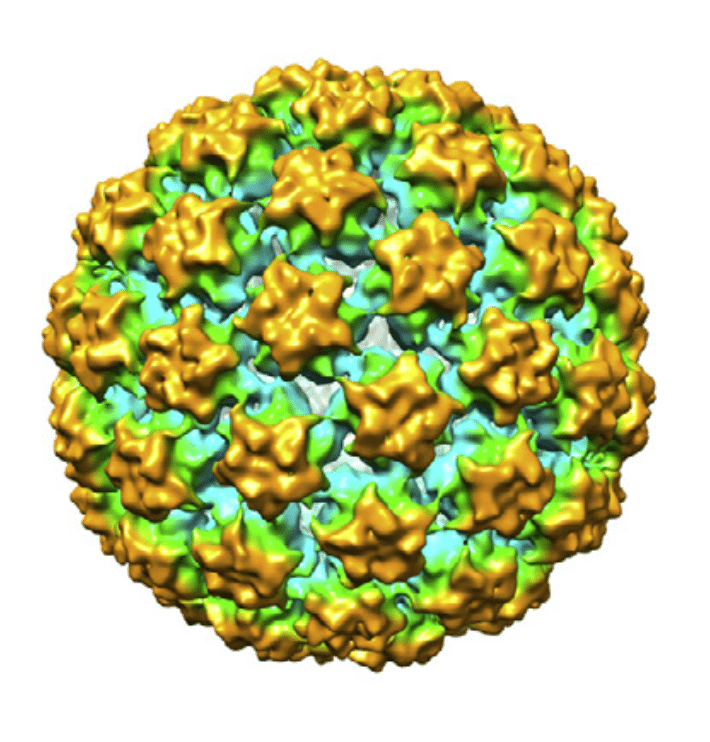
The upshot is that the antibodies we produce in response to one HPV type is going to be specific to that type, and don’t function as effectively against other types. Although it’s possible for an infection to produce some degree of cross-protection to a different HPV type, such protection wouldn’t be reliable or long-lasting. It could perhaps last a few years “but not your whole lifetime,” Eckert cautioned.
HPV can be divided into low-risk and high-risk types. High-risk types are linked to various cancers, most notably cervical cancer. There are around 14 high-risk HPV types, with HPV 16 and 18 being the most commonly linked to cancer development. In fact, both account for roughly 70% of invasive cervical cancer. HPV 16 is also strongly associated with anal cancer and throat cancer.
That said, not all infections with HPV 16 or 18 progress to cancer. Certain variables, some modifiable and some not, are associated with a higher risk of developing cervical cancer. These include smoking and family history.
Although the proportion of infected people who go on to develop HPV-related cancer is small, the infection is so common and widespread that it nevertheless translates to hundreds of thousands of new cancer cases globally each year. The World Health Organization (WHO) estimated that in 2019, HPV caused 620,000 cancer cases in women and 70,000 cancer cases in men.
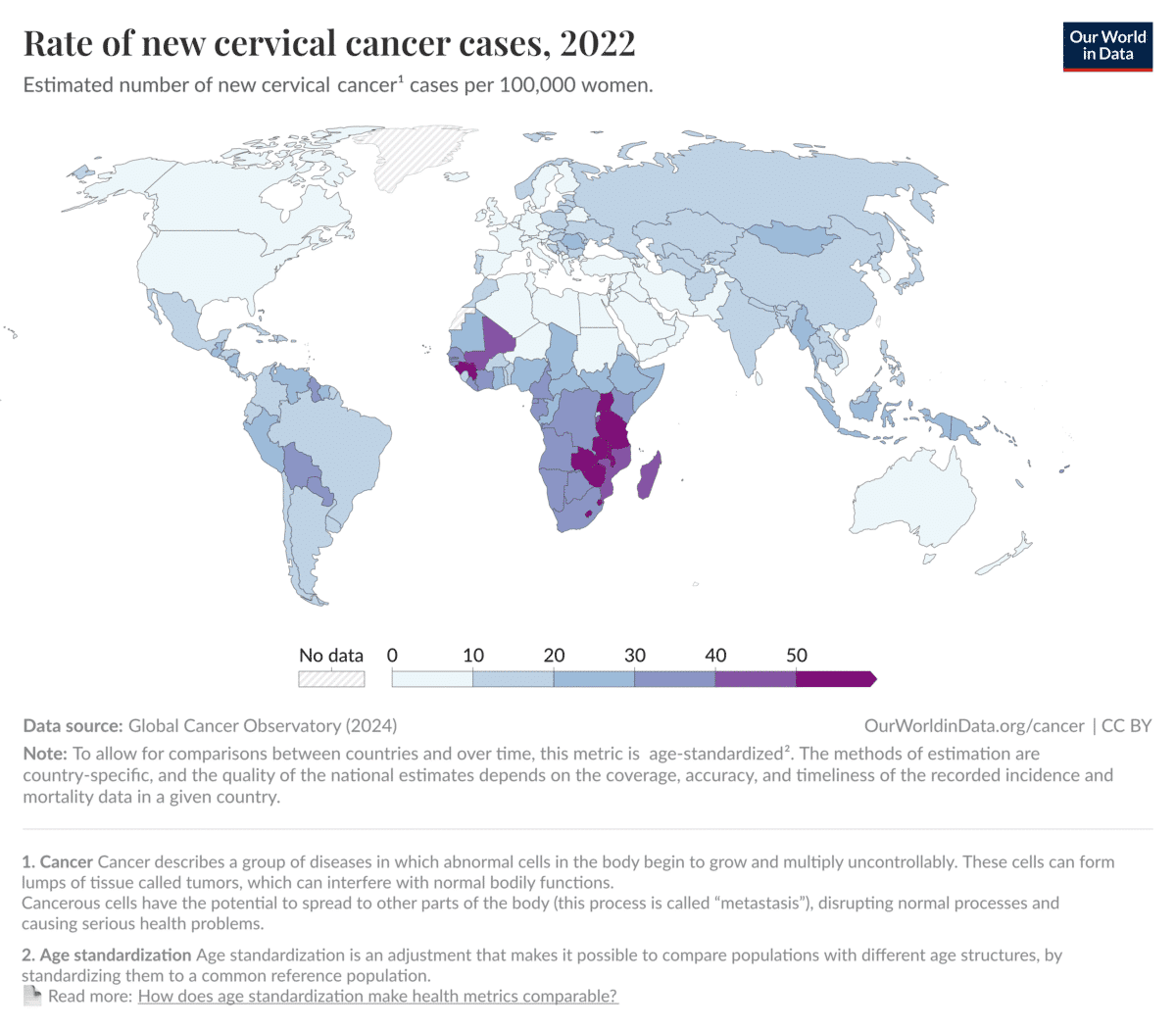
As Figure 2 below shows, populations in low- and middle-income countries face the highest rates of cervical cancer incidence and mortality. This is mainly a result of lack of access to vaccines, cervical screening, and treatment.
HPV vaccination is beneficial, even if you’re infected
As explained earlier, infection-induced immunity to HPV isn’t reliable. Fortunately, scientists have since developed HPV vaccines, which have proven to be among the most promising interventions to combat infection, particularly by HPV types linked to a risk of cervical cancer. These vaccines typically target the high-risk HPV 16 and 18 which cause the majority of cervical cancer. Certain vaccines, like Gardasil 9, also protect people from other HPV types that cause genital warts.
A Cochrane review published in November 2025 summarized findings from multiple published studies. It concluded that girls and young women who received the HPV vaccine were less likely to develop precancerous changes in the cervix. They were also less likely to require treatment for genital warts[1].
These findings are promising, although scientists still need more time to evaluate the direct effect of the vaccine on HPV-related cancers since cancer is generally a disease that takes many years to develop. The review acknowledged that “Followup was up to six years in the trials reporting on these outcomes, which is not of sufficiently long duration for these cancers to develop.”
Vaccination doesn’t treat an existing infection, but it doesn’t mean that there is no benefit to getting vaccinated if you’ve been infected before. As we explained earlier, there are many types of HPV and vaccination can protect you from types that you haven’t been infected with.
“If you’re still having new partners, you kind of want to make sure you’re not going to get new HPV strains,” Eckert pointed out.
Furthermore, while the vaccine cannot treat a pre-existing infection, some studies suggest that women who require treatment for precancer might have a lower risk of recurrence after vaccination.
“It’s hard to know if that’s because you’re keeping that HPV from reactivating or you’re preventing a new infection, but in the United States, it’s recommended by the American College of Obstetricians and Gynecologists that if you ever treat somebody who has cervical precancer, make sure they’ve had the HPV vaccine,” Eckert observed.
“I think the hope is if you get a lot more antibodies in your body […] maybe it will help clear your infection,” she said. “And, you know, we don’t have a randomized prospective blinded controlled trial to say definitively this will help clear your infection, but I think there’s a good chance that it might help. I mean, it certainly won’t hurt you.”
In spite of the vaccine’s lifesaving benefits, HPV vaccine uptake still remains relatively low. According to data from the WHO, HPV vaccine coverage in the European Region for the year 2024 was just 38% in females and only 25% in males. A significant driver of low vaccine uptake, particularly in developed countries, is vaccine hesitancy as a result of misinformation[2].
Science Feedback reviewed various claims linking the HPV vaccine to harms, including autoimmune diseases, infertility, and cancer. Our reviews found no credible evidence to support such claims. On the contrary, large-scale studies have shown no association between the HPV vaccine and such harms[3-5].
A Cochrane review published in 2025 reinforced our earlier conclusions. It found that the evidence indicated no link between the HPV vaccine and various adverse events that some have claimed are caused by the vaccine, including postural orthostatic tachycardia syndrome (POTS), chronic fatigue syndrome, infertility, and Gullain-Barré syndrome[6].
Unproven treatments for HPV infection can do more harm than good
The consensus from public health agencies and experts is clear: there’s currently no cure for HPV infection and the virus can only be cleared by our immune system.
Frustration at being told there’s nothing one can do about a problem is a natural and common reaction. But this can be exploited by purveyors of supplements and other products that will allegedly “boost” your immune system to clear the virus. But the evidence for such claims is scarce.
“Most HPV infections and minor Pap smear abnormalities will resolve without medical intervention,” Ault told Science Feedback. But he acknowledged that “waiting for months for follow-up tests is aggravating for patients and healthcare professionals”, and that “there’s a long-standing interest in treatments for abnormal Pap smears and HPV infections”.
For the moment, “the best options to prevent complications of HPV are condoms, the HPV vaccine and if you smoke, tobacco cessation,” he said.
While some studies on complementary or alternative treatments for HPV infection have shown promise, Ault cautioned that large and conclusive clinical trials have yet to be conducted for these treatments. Indeed, a review published in 2024 looking at complementary and alternative medicine for treating HPV infection and cervical dysplasia concluded the following:
“The evidence for treating HPV and cervical dysplasia with CAM is of low quality because of lack of standardized, clinically relevant treatment outcomes, lack of standardization of products, and minimal reporting on adverse and long-term effects. Future large, randomized control trials are needed to further assess efficacy and safety of CAM therapies to address HPV and cervical dysplasia.”
In this section, we take a look at two products commonly promoted as having anti-HPV effects: AHCC dietary supplements and topical vaginal gels.
AHCC supplements
Some videos promote dietary supplements containing AHCC, or Active Hexose Correlated Compound, a compound extracted from shiitake mushrooms. Some published studies found that AHCC can modulate the immune system, and that some of its immunomodulatory effects can be beneficial in certain diseases. However, studies of the compound are still ongoing and the ability of AHCC to cure infections in people hasn’t been established to date.
One published study is sometimes cited to support the claim that AHCC promotes HPV clearance. This was a randomized, double-blind, placebo-controlled study that included women with high-risk HPV infections that persisted for more than two years. It found that the AHCC-treated group had a higher rate of HPV clearance a year after stopping AHCC supplementation compared to the control group.
However, the study also contains a few important caveats. Firstly, it was quite small, with just 22 women in the group that received AHCC. This makes it difficult to generalize the results and larger studies are needed before we can draw conclusions about AHCC’s effectiveness on the broader population.
Secondly, the women included in the study had varying degrees of cervical dysplasia, or abnormal changes to cervical cells, which can be a prelude to cancer.
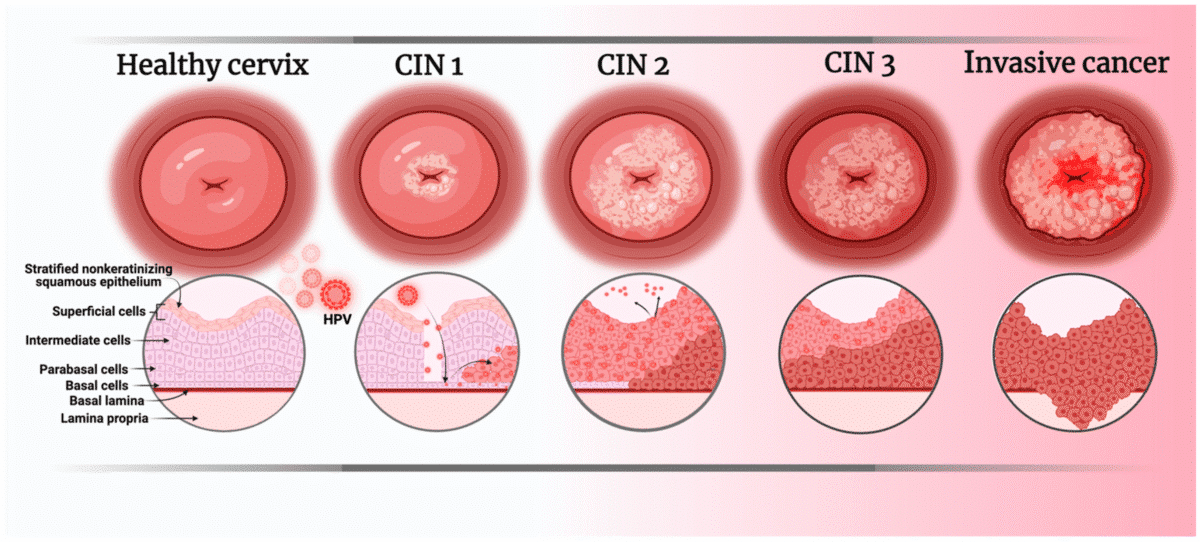
The study didn’t stratify women based on dysplasia level, so it ultimately grouped women showing no abnormal cervical epithelial changes together with women who did have these abnormal changes (CIN 1 and CIN2). The study also didn’t mention how many women fell into these respective categories either, and it’s unclear if the control and treatment groups were balanced in terms of these groups, which could have an effect on the results.
Overall, while the study showed that AHCC could be promising, better-designed studies are still needed to reliably establish its effectiveness against HPV infection.
Topical gels and probiotics
Some social media posts claim that vaginal gels could treat HPV infection (see examples here and here). One such gel is named Papilocare, for which some published studies showed positive results in women with abnormal cervical changes.
Eckert considered these findings “potentially intriguing”, but also expressed reservations about some aspects of the study.
Firstly, she noted that “it’s really hard to do colposcopy” to measure the repair of cervical lesions as the study did, since this approach is difficult to standardize, although the HPV test results in the study were more “definitive”.
Secondly, she observed that one of the studies lacked a control group and had a high loss of follow-up due to COVID-19.
Thirdly, she highlighted that the study “lump[ed] together” women with different degrees of cervical dysplasia.
“ASCUS [atypical squamous cells of undetermined significance] and low-grade SIL [squamous intraepithelial lesions] can be potentially not that worrisome,” she said, but “AGUS [atypical glandular cells of undetermined significance] is quite worrisome and really deserves aggressive follow-up”. One would be “hard-pressed”, she thought, to consider these different groups as equivalent to each other.
“I think it’s just really messy and it makes me worried that—especially people who have atypical glands of undetermined significance—they would [delay] their follow-up to try this and it could cause harm,” she said, adding:
“A small study where you lump a lot of people together and you don’t have a control group: I just wanna have healthy skepticism. We’ve got people in here that have HPV 16 and 18. I just don’t want people with HPV 16 and 18 to fool around at all.”
“I would love it if this could work,” she said, “but I would say that in well-controlled trials, it’s been incredibly hard to show effective treatment”.
She considered that a larger and better-designed study that controlled for different factors like age and HPV testing would still be needed.
Apart from Papilocare, there are also gels promoted as having anti-HPV effects thanks to “probiotics”. However, the evidence showing that this form of gel is effective is scarce.
Many are familiar with probiotics, which are live microorganisms like bacteria and yeast that are thought to promote gut health, thanks to yogurt and other types of fermented foods. But probiotics are increasingly promoted as health supplements, with claims that they will improve health and immunity. However, experts have expressed skepticism about such broad and ill-defined claims.
While maintaining a healthy vaginal microbiome is essential to maintain the natural defenses against HPV infection (see Figure 4 below) and other pathogens, there’s no guarantee that gels containing probiotics will necessarily improve those defenses.
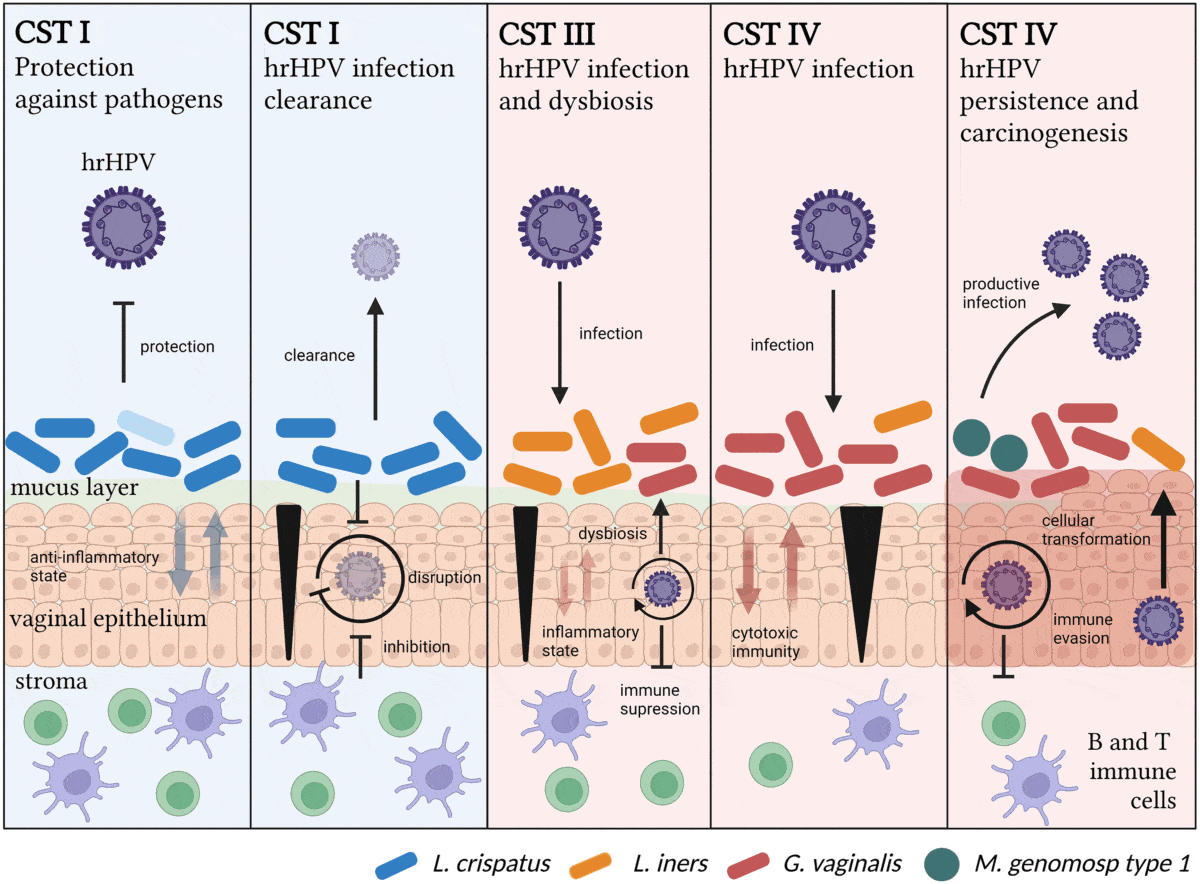
Firstly, not all probiotics are created equal.
“The probiotics that are on the market are not helpful because most of the time they are the wrong kind of Lactobacilli, for instance,” Eckert explained. While some of these Lactobacilli can be beneficial for the gut, the ones that we consume don’t impact the vagina.
For example, one common Lactobacillus found in probiotic foods like yogurt is Lactobacillus acidophilus. However, L. acidophilus doesn’t produce hydrogen peroxide. This is in contrast to its relative that colonizes the vagina called Lactobacillus crispatus, which does produce hydrogen peroxide.
Why is this distinction important? As it turns out, hydrogen peroxide is a key component of the natural defense system protecting cells in the vagina from viruses like HIV.
Secondly, some supplements contain Lactobacilli that aren’t adapted to humans, such as those found in cows. The problem is, these types of Lactobacilli don’t persist in the human vagina. “If you put cow Lactobacilli in by douching or anything else, it washes out in two hours,” Eckert said.
Finally, many of the products that are being pushed on TikTok aren’t regulated by health authorities, which puts consumers at risk. Eckert warned that “the purity of the substances can be quite questionable”, and the impurities and undisclosed ingredients in these products can cause harm. For example, products that contain glucose could end up triggering a vaginal yeast infection.
For these reasons, Eckert expressed doubt over the risk-benefit profile of such products. “I feel like it’s not neutral to put stuff in your vagina,” she said, adding:
There’s “a very complex ecosystem [in the vagina] and you need it to be functioning well to protect you and when you don’t know what you’re putting in and how pure it is and how well it’s made—I’ve seen a lot of harm come from that in my own practice with patients.”
While there have been some studies exploring the use of probiotics for treating vaginal conditions like bacterial vaginosis, these haven’t found beneficial effects against HPV.
In short, applying untested and unregulated vaginal gels comes with considerable health risks that aren’t balanced by any demonstrated health benefits—something that many social media posts don’t warn users about. Eckert concluded:
“I think the question that women need to ask themselves is: am I putting something in my vagina that’s actually going to make me more prone to infections? Because really, I think people don’t understand what a delicate ecosystem the vagina is. It’s like a lush tropical rainforest, a really delicate ecosystem, and if you put too much in it, you actually can grow weeds. You can change what’s growing in there, and you can be more susceptible to sexually transmitted infections, probably including HPV.”
Conclusion
HPV infection is common and most don’t progress to cancer. However, infection-induced immunity is unreliable and transient, which means we are vulnerable to repeated HPV infections. Getting vaccinated protects people from infection by high-risk HPV types that are associated with a risk of various cancers, notably cervical cancer.
While vaccination can’t treat an existing infection, it can protect someone from other types of HPV that they haven’t been infected by. Therefore, even people who have had a positive HPV test can still benefit from vaccination.
Although there’s currently no cure for HPV infection, research is underway to find potential treatments, some of which show promising results in early research. But larger and better-designed studies are still needed to establish their effectiveness and safety in the broader population.
Experts advise caution with products claiming to treat HPV that are promoted online. Dietary supplements and gels containing probiotics aren’t regulated or tested, and there’s a lack of evidence to show they work. Furthermore, they may even cause harm if there are impurities or undisclosed ingredients in them.
References
- Bergman et al. (2025) Human papillomavirus (HPV) vaccination for the prevention of cervical cancer and other HPV‐related diseases: a network meta‐analysis. Cochrane Database of Systematic Reviews.
- Taumberger et al. (2022) Myths and fake messages about human papillomavirus (HPV) vaccination: answers from the ESGO Prevention Committee. International Journal of Gynecological Cancer.
- Arnheim-Dahlstöm et al. (2013) Autoimmune, neurological, and venous thromboembolic adverse events after immunisation of adolescent girls with quadrivalent human papillomavirus vaccine in Denmark and Sweden: cohort study. BMJ.
- Grimaldi-Bensouda et al. (2013) Autoimmune disorders and quadrivalent human papillomavirus vaccination of young female subjects. Journal of Internal Medicine.
- Andrews et al. (2017) No increased risk of Guillain-Barré syndrome after human papilloma virus vaccine: A self-controlled case-series study in England. Vaccine.
- Henschke et al. (2025) Effects of human papillomavirus (HPV) vaccination programmes on community rates of HPV‐related disease and harms from vaccination. Cochrane Database of Systematic Reviews.