- Climate
If CO2 is 0.04% of Earth’s atmosphere, how does it cause climate change?

In 1900, carbon dioxide accounted for around 280 parts per million of Earth’s atmosphere. Over the following years, carbon dioxide levels dramatically rose, increasing by half to 420 parts per million by 2024.
In that same time, Earth’s average temperature has risen more than 1°C (1.8°F). But taken at face value, ‘420 parts per million’ means that carbon dioxide (CO2) now accounts for about 0.04% of our atmosphere. If CO2 is such a small trace of Earth’s air, then how can it be responsible for such dramatic warning?
This is a common point of confusion – and one often exploited by those who seek to mislead on the climate. Below, we’ll clear up that confusion. We’ll explain how CO2 works in the atmosphere, how it causes warming, and why 0.04% is not so insignificant after all.
Main Takeaways:
- A small quantity of a substance in the atmosphere can have a very large effect.
- In CO2‘s case, it is a greenhouse gas that is capable of trapping heat in Earth’s atmosphere. Oxygen and nitrogen, which comprise 99% of Earth’s atmosphere, can’t directly do this. Therefore, even if CO2 is a tiny fraction of Earth’s atmosphere, it and other greenhouse gases play a disproportionate role in warming the air.
- Human activity, especially burning fossil fuels, has dramatically increased the amount of CO2 and other greenhouse gases in the atmosphere. Scientists credit this increase for causing modern-day global warming.
- Climate scientists have many other ways of being certain that CO2 is responsible for warming the climate. Focusing on pure numbers is misleading – we know what adding CO2 to the atmosphere is doing.
How CO2 works in Earth’s atmosphere
Why do we focus on CO2 instead of nitrogen (which accounts for about 78% of Earth’s atmosphere) or oxygen (which accounts for about 21%)? The answer is that CO2 does something in the sky that nitrogen and oxygen don’t – trap heat in the atmosphere.
While sunlight warms the Earth, the Earth naturally cools off by radiating its own energy out into space. This tends to come in the form of infrared, which has longer wavelengths than the visible light we can see. But CO2 molecules can absorb this infrared and keep some of its heat in the atmosphere.
When a CO2 molecule absorbs infrared, it gains energy. As energized CO2 molecules brush against their oxygen and nitrogen neighbors, they transfer some of this energy to the other gases in the form of heat (Figure 1).
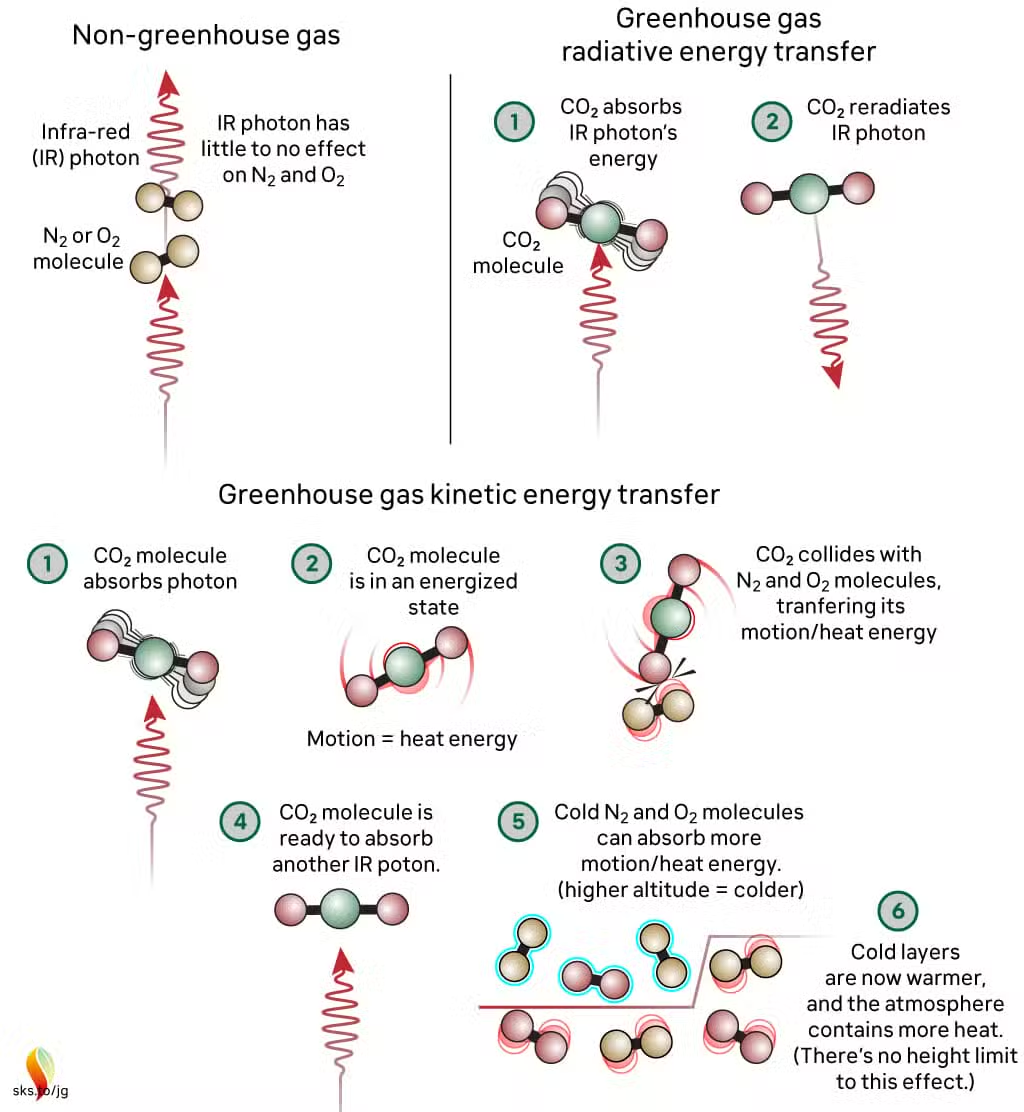
This is called the greenhouse effect, and CO2’s ability to perform it is why we call CO2 a greenhouse gas (GHG). CO2 isn’t the only greenhouse gas in Earth’s atmosphere. Others include methane, nitrous oxide, hydrofluorocarbons, and ozone, all of which are emitted by human activity.
However, nitrogen and oxygen aren’t greenhouse gases. Hence, the vast majority of molecules in Earth’s atmosphere don’t absorb infrared as CO2 molecules do (Figure 1). What this means is that a relatively small amount of greenhouse gas can have a large impact on the rest of the atmosphere.
If the level of greenhouse gas in Earth’s atmosphere increases, then so does the amount of heat this greenhouse gas traps in the atmosphere.
This is what really matters for climate change. It’s how an increase of CO2 from 280 parts per million to 420 – from about 0.03% to 0.04% – can help cause a more than 1°C (1.8°F) increase in Earth’s average temperature. Such an increase in just over a century is far more dramatic than anything we’ve seen in the past few million years.
CO2 isn’t the only greenhouse gas. Other greenhouse gases – such as methane, nitrous oxide, and hydrofluorocarbons – can also trap infrared and transfer it as heat into the atmosphere[2,3]. Some of them are even more potent at warming the atmosphere than CO2.
In the atmosphere, effects matter more than numbers
In general, the percentage of a substance in Earth’s atmosphere doesn’t necessarily tell us much about what it does. Instead, we should care about what effects the substance has. A small amount of a substance can have serious effects.
We can find another example of this in our own atmosphere. Whenever you see an air quality warning telling you that air pollution levels are high, that doesn’t mean that common air pollutants – particulate matter, carbon monoxide, sulfur dioxide, or ozone – make up a large portion of the atmosphere.
In fact, these pollutants reach unsafe levels for humans at just a few micrograms (millionths of a gram) per cubic meter, or just a few parts per billion – far less than the percentage of CO2 in the atmosphere. Even such small amounts can have debilitating effects on human health.
Greenhouse gases like CO2 don’t do the same things as air pollutants, but the underlying numbers tell the same story – a substance doesn’t need to make up the majority of Earth’s atmosphere to have major effects.
We can also see what seemingly small increases in CO2 can do when we look into Earth’s prehistoric past.
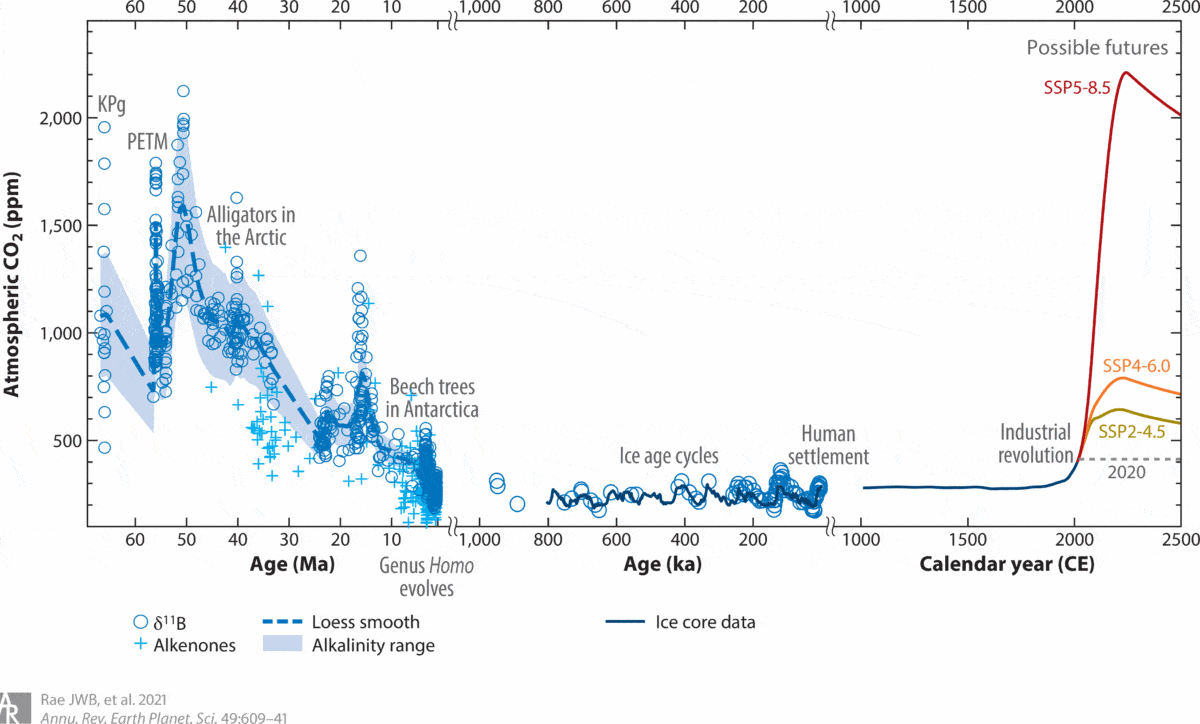
More than 50 million years ago, in the early Eocene epoch, Earth was more than 10°C (18°F) warmer on average than today. Scientists believe these higher temperatures were largely due to the influence of CO2 levels that were well over 1,000 parts per million – more than twice as high as today’s. Even then, CO2 accounted for less than 0.2% of Earth’s atmosphere[4,5].
How do we know that CO2 is responsible for climate change?
Ultimately, scientists don’t need to look at these numbers to know what CO2 and other greenhouse gases are doing to the atmosphere and Earth’s climate. They have plenty of other evidence to show this.
As we’ve covered, scientists have long known that CO2 molecules in the air are capable of warming the atmosphere. François-Marie Bréon, Deputy Director at France’s Laboratoire des sciences du climat et de l’environnement, told Science Feedback in a prior article:
“There is no doubt among the scientific community that the increase in greenhouse gases in the atmosphere, particularly CO2 and methane, is the main cause of the global warming observed over the last 50 years. There are uncertainties about the exact quantification of the impacts, particularly due to climate sensitivity and the cooling effect of aerosols, but these uncertainties cannot call into question the main influence of greenhouse gases.”
So, how do we know this? Climate scientists can measure the effects that these gases have. Instead of percentage, one gauge climate scientists care about is called radiative forcing – put simply, the amount of energy that CO2 and other greenhouse gases put into the atmosphere. When they do so, they find that CO2 is by far the largest contributor to the warming that we’ve observed, with other greenhouse gases (other GHGs) also playing a role (Figure 3).
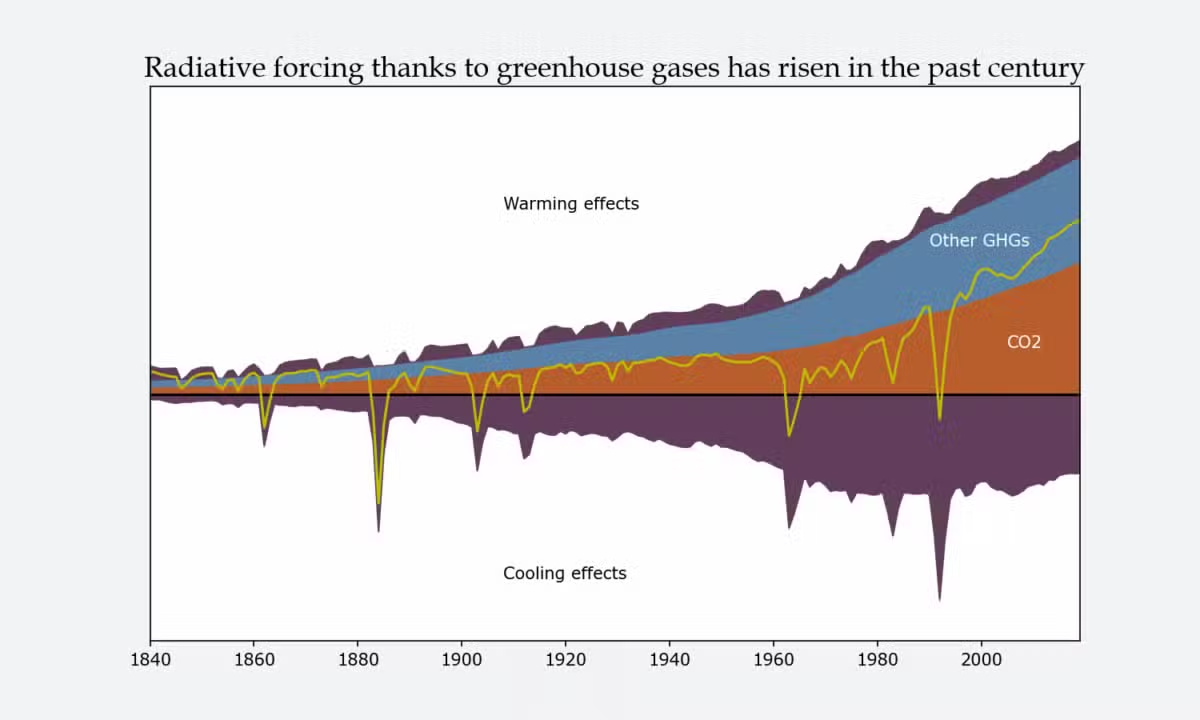
Scientists can calculate radiative forcing with a mixture of satellite evidence and simulations from climate models. Since the 1970s, their climate models have actually been remarkably accurate in predicting climate change[7]. We wouldn’t see this sort of accuracy if climate scientists didn’t understand the processes at play behind how Earth’s atmosphere works.
We also have clear evidence that this extra CO2 comes from human activity. For example, the CO2 in fossil fuels has a different carbon isotope signature than the CO2 naturally in the atmosphere. As we’ve discussed in a past review, we’ve measured changes in carbon isotopes in the atmosphere that match what we’d expect to see if we emit a lot of CO2 by burning fossil fuels.
Conclusion
This argument is a claim often pushed by climate change deniers and people who oppose climate solutions – that, since CO2 is only a tiny fraction of Earth’s atmospheric composition, it can’t have an influence on the climate, and nor can human greenhouse gas emissions. They’ll often raise the 0.04% figure in an attempt to make concerns about climate change seem ridiculous.
But this is a misleading argument that ignores how Earth’s atmosphere actually works. By focusing on the numbers, these claims neglect to discuss what the chemicals behind the numbers actually do. As we’ve shown, just a small amount of CO2 can have a large impact that’s felt all across the planet.
What’s more important is the effects those numbers actually have. When we do, we find that a more important fact isn’t that CO2 is 0.04% of the atmosphere – it’s that CO2 levels have dramatically risen in the past century, and this increase directly leads to global warming.
References
- 1 – Zhong and Haigh (2013) The greenhouse effect and carbon dioxide. Royal Meteorological Society Weather.
- 2 – Pierrehumbert R. (2011) Infrared radiation and planetary temperature. Physics Today.
- 3 – IPCC (2021). Sixth Assessment Report.
- 4 – Harper et al. (2024) Long- and short-term coupling of sea surface temperature and atmospheric CO2 during the late Paleocene and early Eocene. PNAS.
- 5 – Burke et al. (2018) Pliocene and Eocene provide best analogs for near-future climates. PNAS.
- 6 – Rae et al. (2021) Atmospheric CO2 over the Past 66 Million Years from Marine Archives. Annual Review of Earth and Planetary Sciences.
- 7 – Hausfather et al. (2019) Evaluating the Performance of Past Climate Model Projections. Geophysical Research Letters.
Correction (2025-12-17)
We changed ‘carbon dioxide’ to ‘carbon monoxide’ in the list of common air pollutants in the 13th paragraph. Carbon monoxide (CO) is a colorless, odorless, and tasteless gas that can be harmful or fatal when inhaled, as it interferes with the body’s ability to carry oxygen. It’s produced by the incomplete combustion of fuels like gas, wood, or charcoal.