Inaccurate
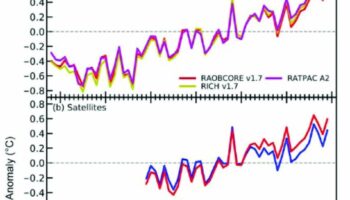
NOAA shows clear global warming trends over the past 58 years based on radiosonde data
Claim:
“The 58 year net gain of global temperature is zero. We are simply in a cyclical, normal ebb and flow of temperature.”

Topics:
Claim:
“The 58 year net gain of global temperature is zero. We are simply in a cyclical, normal ebb and flow of temperature.”
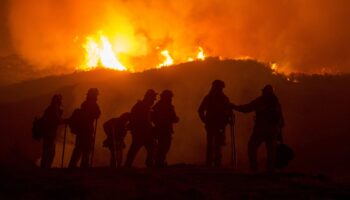
…influenced by anomalous weather events. While foehn winds (North Winds in the north bay area and Santa Ana Winds in SoCal) are common weather events, this year the events were…
Claim:
Despite climate change, the global polar-bear population has increased substantially, the Great Barrier Reef has more coral cover than at any point since 1986, and extreme-heat deaths have declined.
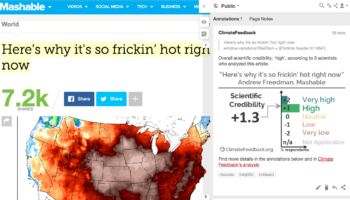
…towards more warm extremes suggests the underlying distributions (weather) are changing. The climatology is shifting towards higher temperatures. “While transient weather variability is playing a key role here, the widespread…
Claim:
Global warming is just the end of the Little Ice Age; Warming is slower than climate models forecasted; Carbon dioxide is beneficial to Earth; Global warming is not intensifying or increasing the frequency of natural disasters
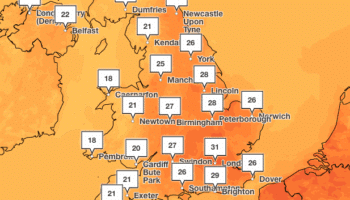
Heatwaves – one of the most dangerous weather hazards – have already increased in severity and frequency at a global scale since the 1950s, mainly driven by climate change[1]. Despite…

…on societies and ecosystems increase in certain kinds of extreme weather events increased melting of Arctic sea ice, glaciers and polar ice sheets increased rate of global sea level rise 4….
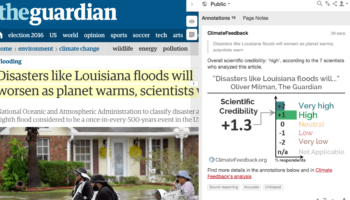
…events can arise from different weather systems, like hurricanes for example, and there is uncertainty in how climate change is influencing some of these weather events. Michela Biasutti Lamont Associate…
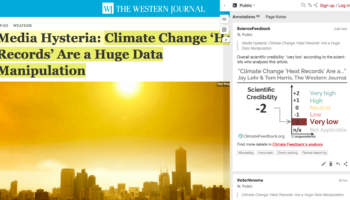
…about global temperatures and global temperature data. The authors attempt to argue that global temperatures are not increasing by cherry-picking some local examples of weather extremes. The headline further claims…
…signal if Arctic warming continues unabated*. Cohen et al (2014) Recent Arctic amplification and extreme mid-latitude weather, Nature Geoscience Overland et al (2015) Nonlinear response of mid-latitude weather to the…